
There are few things more unsettling than realizing something is living inside your body without your permission.
Threadworm infections tend to announce themselves quietly. No dramatic fever. No emergency-room moment. Just an itch that won’t stop. A vague discomfort. A sense that something’s… off. And because the symptoms often feel minor, many people ignore them longer than they should.
I’ve spoken to parents who assumed their child’s nighttime restlessness was “just a phase.” Adults who blamed stress. Travelers who chalked it up to unfamiliar food. By the time threadworms are considered, the infection has often had plenty of time to spread.
The tricky part? Threadworms don’t care how clean your house is or how careful you think you are.
What threadworms actually are (and why they’re so common)
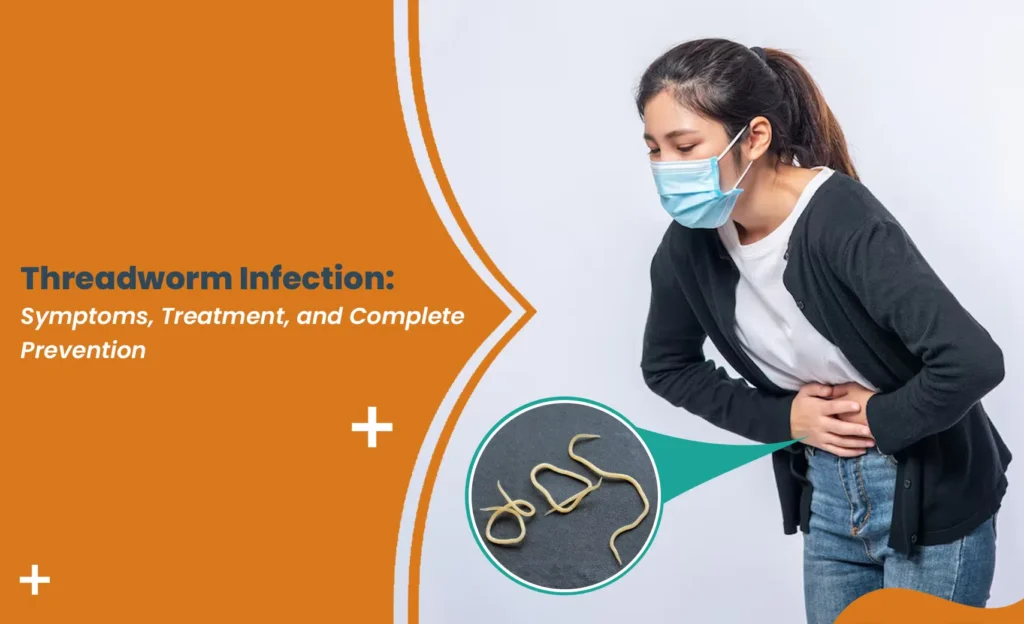
Threadworms – also called pinworms – are tiny, white intestinal parasites. They’re most common in children, but adults are far from immune. In fact, many adult cases come from household exposure rather than travel or poor hygiene.
The worms themselves live in the intestine. At night, the females migrate to the anal area to lay eggs. That’s when the itching begins. And that’s also how the infection spreads so easily – through hands, bedding, clothing, and everyday surfaces.
It’s not a sign of neglect. It’s a sign of how efficiently these parasites move.
The symptoms people miss – or misread
The classic symptom is itching, especially at night. But not everyone experiences it the same way.
Some people notice disturbed sleep, irritability, or a constant feeling of restlessness. Others report vague abdominal discomfort, nausea, or appetite changes. In kids, it can look like sudden mood swings or trouble concentrating at school.
Adults sometimes mistake threadworm symptoms for hemorrhoids, anxiety, or even food intolerance. I’ve heard more than one person say, “I didn’t think worms were something adults got.”
They are. Quietly.
How threadworm infections are diagnosed
Diagnosis is often simpler than people expect. In many cases, doctors rely on symptoms alone, especially when itching follows a clear pattern.
Sometimes a “tape test” is used – pressing clear tape against the skin first thing in the morning to capture eggs. It’s not glamorous, but it works.
What’s more important than the test itself is timing. The longer the infection lingers, the more chances it has to spread within a household.
Treatment: what actually works
Treating threadworms is usually straightforward, but it has to be done properly.
Antiparasitic medications are effective when taken correctly. One commonly prescribed option is Iverford 6 mg, which targets the worms directly and helps clear the infection from the body.
Here’s the part many people miss: treatment usually involves more than one dose, spaced apart. That second dose isn’t optional. It’s there to kill newly hatched worms that survived the first round.
Doctors may recommend Iverford 6 mg again after a short interval for this exact reason. Skip the follow-up, and reinfection becomes much more likely.
Why everyone in the household matters
Threadworms don’t respect personal space.
If one person in a household is infected, others are often exposed – sometimes without symptoms. That’s why many clinicians advise treating close contacts at the same time, even if they feel fine.
In these cases, Iverford 6 mg may be prescribed for multiple household members under medical guidance. It’s not about overmedicating. It’s about breaking the cycle.
I’ve seen families caught in a frustrating loop of reinfection simply because one person was treated while others weren’t.
Hygiene isn’t optional – but it’s not enough on its own
People often assume hygiene alone will fix the problem. Wash your hands. Change your sheets. Clean the bathroom.
All of that matters. A lot.
But hygiene without treatment rarely clears an active infection. Eggs can survive on surfaces. Hands move fast. Kids touch everything.
Medication clears the worms. Hygiene prevents them from coming back.
One without the other is half a solution.
The emotional side nobody talks about
There’s a quiet shame around parasitic infections, especially in adults. People whisper. They avoid the topic. They delay seeing a doctor.
They shouldn’t.
Threadworms are common. They don’t mean you’re dirty. They mean you’re human, living in a world where microscopic organisms exist whether we like it or not.
I’ve interviewed people who felt embarrassed buying medication. Others who hid symptoms for weeks. That delay often causes more stress than the infection itself.
Safety, dosage, and realistic expectations
When used as prescribed, medications for threadworms are generally well tolerated. Some people experience mild side effects – headache, nausea, or fatigue – but serious reactions are uncommon.
That said, Iverford 6 mg should only be taken under medical advice, especially for children, pregnant individuals, or those with underlying health conditions.
Taking more doesn’t make it work faster. Taking it incorrectly increases the risk of failure.
One thing doctors emphasize is patience. Itching can persist briefly even after treatment, not because the medication failed, but because the body is still reacting to irritation.
Prevention is where most people slip
Once the infection clears, prevention becomes the real work.
Daily morning showers help remove eggs. Short fingernails reduce transmission. Frequent laundering – especially bedding and underwear – matters more than deep cleaning every surface.
And yes, handwashing still counts. Before meals. After the bathroom. After scratching, especially at night.
Medication like Iverford 6 mg clears the infection, but habits keep it from returning.
Reinfection: the frustrating reality
Reinfection happens more often than people expect. Not because treatment failed – but because prevention was incomplete.
Eggs can survive for days. One missed habit, one untreated contact, one forgotten follow-up dose.
This is why doctors sometimes repeat Iverford 6 mg treatment in stubborn cases, combined with stricter hygiene measures. It’s not overkill. It’s realism.
A quiet but important takeaway
Threadworm infections aren’t dangerous in most cases, but they are disruptive. To sleep. To focus. To peace of mind.
They thrive in silence and discomfort. They fade when addressed directly.
Whether it’s your first encounter or a frustrating repeat episode, the combination of proper treatment, realistic hygiene, and follow-through makes all the difference. Medications like Iverford 6 mg play a role – but awareness plays an even bigger one.
Ignore the stigma. Pay attention to the signals. And don’t wait for discomfort to turn into exhaustion.
Your body is usually trying to tell you something – long before it starts shouting.
FAQs
1. How did I even get a threadworm infection in the first place?
Most people never get a clear “aha” moment – and that’s normal. Threadworms spread quietly through everyday contact. Shared bathrooms, bedding, door handles, unwashed hands. You don’t need to travel anywhere exotic or do anything reckless. In many cases, it comes from someone else in the household who didn’t even know they were infected. It’s frustrating, but it’s also very human.
2. Is nighttime itching always a sign of threadworms?
Not always – but when itching is worse at night and keeps repeating, it’s worth paying attention. Threadworms are active after dark, which is why the discomfort tends to show up then. Many people dismiss it as irritation or stress at first. The pattern matters more than the intensity.
3. Why does treatment involve more than one dose?
Because threadworms are stubborn in a very specific way. The first dose kills the active worms, but not the eggs. The follow-up dose is there to catch the next wave before it has a chance to start the cycle again. Skipping it is one of the biggest reasons people end up dealing with reinfection.
4. Why am I still itchy even after taking medication?
This is one of the most anxiety-inducing parts, and doctors hear it all the time. The itching doesn’t disappear instantly because the skin has been irritated for days – or weeks. The nerves need time to calm down. As long as the itching slowly improves, it’s usually a sign that treatment is working, not failing.
5. How do I stop this from coming back without obsessing over cleanliness?
You don’t need to turn your home into a laboratory. The goal is consistency, not perfection. Regular handwashing, daily morning showers during treatment, clean bedding, and short fingernails go a long way. What matters most is sticking with these habits for a couple of weeks, not doing everything flawlessly for one day and then burning out.