
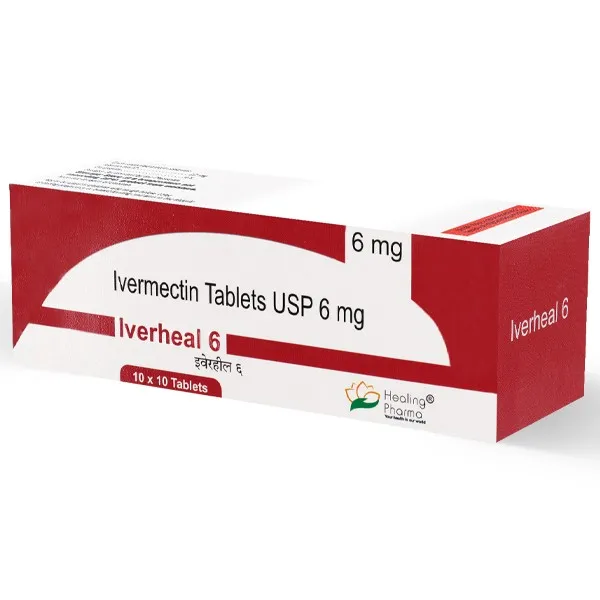
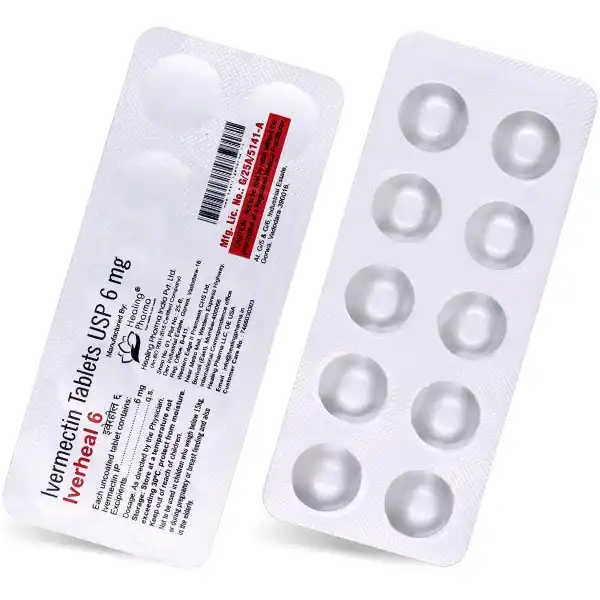
Iverheal 6 mg contains Ivermectin. This is used to treat parasitic infections (like Strongyloidiasis, Onchocerciasis, Scabies, and Head Lice) in the intestines and other parts of the body. It eliminates harmful parasites and relieves symptoms like stomach pain, diarrhea, and weakness caused by infestations. It belongs to the class of antiparasitic medications. It is used to deal with other worm infections in the gastrointestinal tract for managing intestinal strongyloidiasis and onchocerciasis. You swallow the tablet whole with a glass of water, then drink. You should avoid crushing or chewing the tablet.
Key Features
| About Iverheal 6 mg |
| Drug Class: Anthelmintic and antiparasitic |
| Subclass: Avermectins |
| Product Details | |
| Composition | Active ingredient: Ivermectin
Inactive ingredients:
|
| Packaging Type | Blister |
| Pack Size | 10*10 |
| Dosage | 6 mg |
| Therapeutic Class | Anti-infectives / Antiparasitic agents |
| Action Class | Anti-infective/ectoparasiticide |
| Chemical Class | Macrocyclic lactone derivative (Avermectin) |
| Shelf Life | 2-3 years from the date of manufacturing |
| Usages | To treat parasitic infections |
| Storage |
|
How Does Iverheal 6 mg Work?
Iverheal 6 mg attaches to glutamate-gated chloride ion channels in the parasite’s muscle cells and nerves. As a result, cells and nerves stop giving signals. As a result, worms can not move and fail to take glucose from their hosts’ bodies. Gradually, they became paralyzed and died. Moreover, Ivermectin is an agonist of the neurotransmitter gamma-aminobutyric acid (GABA) that disrupts GABA-mediated central nervous system (CNS) neurosynaptic transmission in parasites.
Side Effects
Very common side effects are:
- Muscle pain or stiffness
- Difficulty in moving
- Pain in the joints
- Swollen, painful, or tender lymph glands in the armpit
Less common side effects are:
- Headache
- Nausea
- Vomiting
- Dizziness
- Diarrhoea
- Fever
- Itching
- Rash
- Abdominal pain
Rare side effects are:
- Loss of bladder control, bowel control or consciousness
- Decreased awareness or responsiveness
- Difficulty in standing or walking
- Bloody eye
- Blurred vision
- Back pain
Usages
Iverheal 6 mg is used for the following areas:
- Managing intestinal strongyloidiasis, which is caused by Strongyloides stercoralis.
- Controlling onchocerciasis, which is caused by Onchocerca volvulus.
- Helping the body get rid of other gastrointestinal tract worm infections.
- Reducing scabies, which is caused by the Sarcoptes scabiei mite.
- It treats lice infestations.
Dosage
Dose is dependent on patients’ medical history, current medical condition, and allergic reactions. It is advised to talk with a healthcare provider before taking this medicine.
Interactions
- Iverheal 6 mg negatively interacts with warfarin, certain antifungals, macrolides, and central nervous system depressants (like benzodiazepines, barbiturates, zolpidem, etc.).
- It also interacts with antifungal drugs such as ketoconazole and posaconazole.
- It is advised to avoid alcohol, caffeine, and energy drinks while taking this medication or treatment for parasitic infection.
- If you have any allergy to food or drink or medicine, you should share this with your healthcare provider before taking a dose. This reduces the risk of side effects.
Pharmacokinetics
Absorption and bioavailability
- Peak time: Four hours after dosing.
- Food effect: A large meal slows down the speed of absorption of the medicine.
- Empty stomach: Best for dose
Distribution
- Tissue spread: Highly
- Blood-brain barrier: Does not easily cross into the human CNS
- Plasma binding: Strongly
Metabolism and excretion
- Liver breakdown: Through hepatic cytochrome P450 enzymes (mainly CYP3A4).
- Elimination half-life: Approx. 18 hours.
- Excretion route: Feces over 12 days (<1% appears in urine).
Safety Concern
- Stop taking doses if you see side effects and talk with your healthcare provider.
- It is not recommended for pregnant women, trying to conceive, new mothers, and breastfeeding women.
- Use carefully if you are suffering with heart, liver or kidney disease.
- Talk with your healthcare provider at first about your supplement or any herbal treatment before deciding on a dose.
Precautions
- If you treat for river blindness, you should get retreatment and surgery to kill the adult parasite.
- If you are treated for an intestinal infection from threadworms, you will need to have your bowel movements tested to make sure that the infection is gone.
- Do not take other medicine while treating parasitic infection.
Conclusion
Iverheal 6 mg (ivermectin) is used to treat river blindness (onchocerciasis), intestinal infection from threadworms (strongyloidiasis), and other types of worm infections. It works by blocking the nerve and muscle functions of worms. Thus, their bodies become paralyzed and killed. Some side effects may occur and do not need medical attention. These side effects may go away during treatment when your body starts to adjust to the medicine.
FAQs
1. What is Iverheal 6 mg?
This is used to treat worm infections in humans’ intestines.
2. Is Ivermectin safe for kidneys?
It depends. If this takes a long time, then it is not safe for the human kidney.
3. Can pregnant women take Iverheal 6 mg?
It should not be used during pregnancy. If pregnant women suffer from parasitic infection, they should take this medicine under proper medical guidelines.
4. How many times can a person take Ivermectin?
This depends on infected persons’ medical condition and previous medical reports.
5. How to take Ivermectin correctly?
You take it on an empty stomach for 1 to 2 hours before eating a meal.
Olivia Johnson –
Persistent itching is a major issue for my skin. I also have pretty low energy. I’ve noticed that after taking Inverheal regularly, my skin has become quite normal. Highly recommend the medication.