
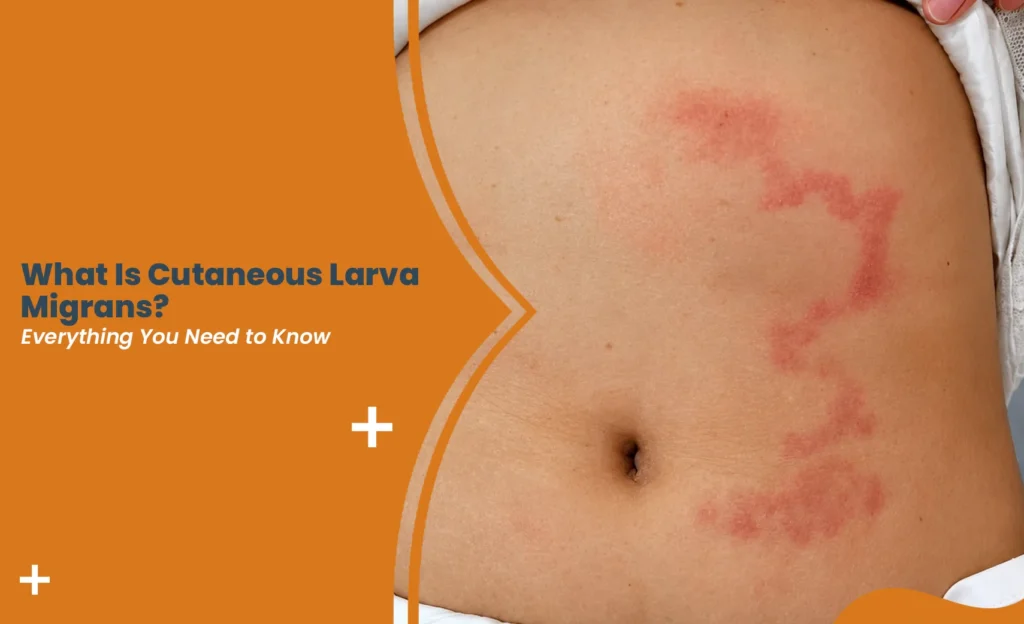
Cutaneous larva (CL) migrans is a condition that causes a red, intensely itchy, snake-like line to travel across the skin. It’s one of the more frequently occurring skin infections when traveling, but many people may not have heard about this condition until it has affected them. Below, we’ll explain what it is, why it occurs, how to recognize it, and what to do about it.
What is Cutaneous Larva Migrans (CLM)?
Cutaneous larva migrans, also known as CLM, is a parasitic skin infection that is caused by hookworm larvae, which accidentally burrow into human skin. It is sometimes referred to as creeping eruption because the characteristic form is a thin, elevated, winding line that appears on the skin within days or weeks as the larva moves under the skin, and while it can be unsettling to notice, fast relief is usually within easy reach.
Cutaneous larva migrans is a parasitic skin condition, unlike infections of the internal organs, where the larvae get stuck in the upper layers of skin and are unable to complete their life cycle in humans. Humans are an unintended host. That is good news, as it is an intensely uncomfortable infection but in most cases does not extend to internal organs.
Cutaneous larva migrans causes
The most common source of the skin form of the disease is exposure to soil or sand that is contaminated with animal feces, usually from dogs and cats with hookworm infections. Let’s take a look at how it works:
- Infectious animals excrete hookworm eggs in their manure.
- Eggs hatch in the warm moist soil or sand, forming larvae.
- Humans come in direct contact with the larvae when walking on contaminated ground or sitting or lying on contaminated ground.
The larvae of the hookworm enter the skin, typically through hair follicles, cracks, or areas of thin skin such as the feet, hands, buttocks, or back.
It is this that makes beaches in tropical and subtropical countries strongly associated with CL. Common hot spots include beaches in Caribbean countries, Southeast Asia, Africa, and South America. Typical risk factors include children playing in contaminated soil, sitting on sand, or walking on sand without shoes. It’s like an environmental problem and doesn’t necessarily spread from person to person.
Cutaneous Larva Migrans Symptoms
Early detection of signs and symptoms of CLM will help you get treatment before the condition gets worse. Common signs include:
- A skin rash that is extremely itchy and typically develops within hours to days of exposure.
- A thread-like, raised, red track that slowly moves across the skin (mm to cm per day).
- A raised, red area at the site of entry.
- Fluid-filled bumps or small blisters along the track
- Making itching worse at night and interfering with sleep
- Occasionally, secondary bacterial infection due to scratching
These areas of the body commonly come into contact with contaminated sand/soil and include the feet (particularly the soles and between the toes), buttocks, thighs, and hands. If left untreated, the itchy skin rash and track may last for weeks to months because the larva eventually dies because it doesn’t live long in the human skin.
How Is Cutaneous Larva Migrans Diagnosed?
Diagnosis is typically clinical, with a healthcare provider being able to make a diagnosis based on the typical, winding, non-alopecic rash and questioning the patient about their recent travel history or history of sand/soil exposure. Typically, no blood tests or biopsies are required, although a healthcare provider might consider excluding other skin diseases if the symptoms are unusual.
Cutaneous Larva Migrans Treatment
The fortunate thing is that the treatment of CLM is usually effective, and symptoms resolve completely. Treatment options include the following:
1. Oral Antiparasitic Medication
Oral anthelmintic (anti-parasitic) drugs are generally the most effective treatment options, since they have systemic activity and kill the migrating larvae.
Widely accepted as the treatment of choice is Ivermectin for cutaneous larva migrans, because it has a high cure rate in a single dose. The drug commonly prescribed for this purpose is Iverguard 12 mg, which is made up of ivermectin, which is a commonly used drug.
Another excellent alternative is Albendazole treatment; this is sometimes used when ivermectin is not suitable or available. Aldol 400 mg is an albendazole-containing product that is used often as a short course (usually 3-7 days depending on the case) to kill the larvae.
These medications act by interfering with the larvae’s metabolism and thereby destroying them and thereby stopping the migration of the rash.
2. Topical Treatments
Topical antiparasitic creams (e.g., topical thyabendazole) can be applied directly to the affected area, but oral treatment is usually more effective and reliable for rapid relief of very mild or localized infections.
3. Symptomatic Relief
Other treatments may help control the itchy skin rash in the meantime:
- Antihistamines to help with itchiness
- Use cool compresses to relieve any inflamed skin.
- Preventing secondary bacterial infection by avoiding scratching.
Can Cutaneous Larva Migrans Be Prevented?
There is no need to suffer from this skin parasite infection. A few simple precautions are all you need to take:
- Be careful of sandals or shoes on beaches and places where animals defecate.
- Sit or lie on a towel or mat when sitting or lying on sand
- Do not come into direct contact with soil where there are stray or loose animals
- Thoroughly wash and dry feet after walking on sand.
- Regularly deworm pets to minimize contamination of the environment.
Seeking medical attention
If you experience any of these, get medical help:
- The itchy rash is getting larger or is worsening in size.
- The secondary infection signs appear (pus, redness, fever).
- This trend has continued for over a couple of days without any breakthrough.
- You have just come back from a tropical destination and have noticed a rash on your skin that you don’t know the cause of.
Final Thoughts
Cutaneous larva migrans is a highly treatable skin parasite infection. It causes itching. If you can recognize its symptoms at an early stage, you can take precautions. It is mainly caused by contact with hookworm larvae through contaminated sand or soil. If you plan to travel to tropical areas, you should keep prevention items and adopt precaution strategies such as wearing footwear, not touching soil/sand, and washing your hands/legs immediately if these are touched by soil/sand.
FAQs
1. Is cutaneous larva migrans contagious from person to person?
No, CLM cannot spread from one person to other persons. It contaminates through skin directly.
2. How long does cutaneous larva migrans last without treatment?
You should not avoid treating. You should start treatment immediately if you are infected with CLM. It takes a few weeks or months to cure as per your condition regarding infection and medical history.
3. Which is better for treatment, ivermectin or albendazole?
Both are effective on CLM infections. Ivermectin is a high single dose, and albendazole is a short multi-day course.
4. Can children get cutaneous larva migrans?
Yes. There is a high chance to get infected with CLM because they play in contaminated areas like public beaches or playgrounds.
5. Does cutaneous larva migrans leave scars?
It does not create any permanent scars. If you get proper treatment, scratching will be minimized.