
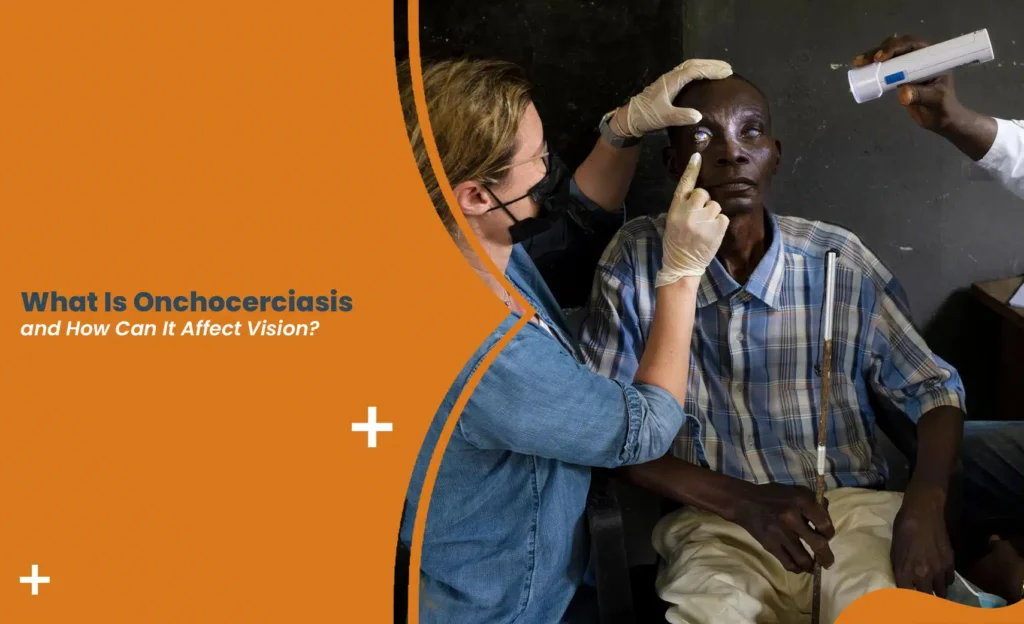
Onchocerciasis is one of those neglected tropical diseases that has, you know, slowly taken away people’s sight from the shadows. The World Health Organization figures and repeats that roughly 20 million people are infected globally, with more than 99 percent of cases showing up in sub-Saharan Africa. And then there’s the part that really sticks, about 1.2 million people ending up with vision loss or onchocerciasis and blindness because of it. Totally preventable, yes, but somehow it still keeps affecting rural communities who live next to fast-moving rivers, and they keep getting stuck in that cycle.
A Parasite Carried on Wings
The causes of onchocerciasis starts with a thread-like roundworm, specifically Onchocerca volvulus infection, and the infection really kicks off after an infected blackfly bites someone. Those insects like fast flowing, oxygen rich rivers and streams, which is also why people call it river blindness. When the infected fly feeds, it deposits larvae into the skin. Over the next months, the larvae turn into adult worms, and they end up coiling together in fibrous lumps, called nodules, under the skin. Female worms can last 10 to 15 years, and they release millions of microscopic offspring, microfilariae, and these move through skin and eyes, more or less like a slow background trouble.
How the Infection Spreads From Person to Person
Now, if you’re thinking it spreads the usual way (touch or food or water) it really doesn’t. This is the tricky bit. Onchocerciasis transmission or blackfly transmitted disease doesn’t pass directly between people. Instead, the blackfly has to bite an infected person first, pick up microfilariae, and carry them. Inside the fly, the larvae develop for about a week, then they become infectious. After that, another bite on a different person restarts the whole thing. How river blindness spreads: repeated bites over years, and a heavy infection builds up bit by bit. Blackfly bites and parasites face an ongoing exposure risk every season and again and again.
Where the Disease Is Found
People like farmers and fishers, and anyone working outdoors near riverbanks, are more exposed. It’s because the same land that grows crops also hosts blackflies. Long-term residence in endemic places matters too, along with frequent daytime outdoor activity and limited access to preventive medicine programs to increase risk factors for onchocerciasis. People who travel briefly usually don’t get hit very hard, but longer stays can raise the risk, sometimes a lot.
When Your Skin Starts to Tell the Story
Onchocerciasis symptoms show up on the skin, and many people notice it before their eyes start acting up. Skin itching caused by parasites can be intense and relentless, and it can mess with sleep, work, and even school attendance. Onchocerciasis skin symptoms include:
- Rashes and small bumps
- Thickened, dry, scaly skin, sometimes called lizard skin
- Patchy pigment loss, often described as leopard skin, usually on the shins
- Painless nodules under the skin, especially near joints, ribs, and hips
- Loss of skin elasticity, with early aging and hanging folds in the groin
And constant scratching can open sores, then secondary bacterial infections show up, and that adds both physical strain and social pressure.
When the Eyes Are Caught in the Crossfire
Onchocerciasis eye disease or parasitic eye infections develops when microfilariae reach the eyes. When they die, they spark inflammation, and repeated rounds of inflammation gradually damage the eye’s internal structures. The effects of river blindness on eyesight show gradually. Peripheral vision narrows first, then central vision fades, and eventually blindness can follow. Onchocerciasis and vision loss are usually permanent, which is exactly why early treatment is so important. River blindness is considered one of the leading parasitic diseases affecting the eyes.
Beyond the Eyes: Wider Consequences
Chronic itching and disfiguring skin changes can lead to stigma, depression, and social isolation. Blindness can make it harder to work, farm, or care for a family, which then worsens poverty in a pretty direct way. In severe situations, some villages have been abandoned because the land near rivers became too dangerous to farm. A few people also get musculoskeletal problems, weight loss, and, in children, slower growth. And in highly affected areas, the disease may also contribute to epilepsy, although the link is still being worked out, step by step.
Getting a Clear Answer
Onchocerciasis diagnosis often uses a skin snip test. Basically, a tiny piece of skin is taken, soaked in saline, and examined under a microscope to see whether microfilariae are present. Healthcare providers might also check for nodules, remove one for examination, or do an eye exam using a slit lamp to spot larvae or tissue damage. Blood tests that find antibodies or parasite DNA can help too, especially for travellers or in areas where mass treatment has already reduced worm loads. Since the symptoms can look like eczema, scabies, or allergic reactions, lab confirmation is really valuable, just to make sure the label is correct.
A Medical Option
Onchocerciasis treatment option is ivermectin, so Iveroot 12 mg is basically one tablet strength that contains this medicine. Ivermectin tends to paralyze the microfilariae, so itching gets less and eye damage slows down. It does not actually wipe out the adult worms. This is why repeat doses are needed, often once or twice a year, for the 10 to 15 years that those adult worms can survive. Big community distribution programs have dropped transmission in a huge way, and in several places the disease is already gone.
The dose depends on body weight, so how many tablets you take should be decided by a healthcare provider. Iveroot 12 mg is usually swallowed on an empty stomach with water. Some mild reactions can happen while the parasites die, like itching, rash, fever, sore joints, swollen glands, and dizziness. Most of the time these calm down within a couple of days. Don’t take it without a confirmed diagnosis, and don’t raise the dose yourself. Sometimes doxycycline is added, sort of like a supporting measure, to reduce how long the worms live.
Keeping Blackflies at Bay
Onchocerciasis prevention is not one thing only; it’s community effort and personal caution. Mass drug administration programs are still the main route, and they’re paired with vector control, like larvicides in breeding areas. For personal risk reduction, you can wear long sleeves and trousers, use insect repellent, skip riverbanks during the highest biting times in daylight, and join local treatment rounds. Unlike mosquitoes, blackflies tend to bite mostly in the day, so you keep protection going through the whole daytime window.
Summing Up
You have to know when to seek medical care for vision changes. Go to a healthcare provider soon if you have persistent eye redness, blurred vision, a shrinking field of vision, trouble seeing at night, or eye pain, especially if you live in or recently visited an endemic area. Strong itching, skin changes, or lumps under the skin also deserve attention. Onchocerciasis is serious, but it can be controlled. With awareness, defense against blackfly parasite infection, regular treatment, and early medical care, vision can often be maintained, and communities can move forward safely. If you think you might have an infection, make sure you get a proper diagnosis before starting any medicine.
FAQs
1. Where does onchocerciasis commonly find?
Most cases are in 31 African countries. But there are smaller hotspots too, like in Yemen and in parts of Latin America, especially near the Venezuela-Brazil border.
2. Who should not consume Ivermectin?
Ivermectin is generally not for children below 15 kilograms, pregnant women, and people who live in places where Loa loa infection exists, unless there is specialist screening, because in rare but serious cases severe reactions can show up.
3. Does river blindness take a serious condition?
Yes, inflammation can cloud the cornea, inflame the iris and the middle layers, and also harm the retina and the optic nerve.
4. What are the side effects of Iveroot 12 mg?
The side effects are itching, rash, fever, sore joints, swollen glands, and dizziness.
5. What are the river blindness symptoms?
River blindness symptoms can include redness, irritation, light sensitivity, tearing, and this gritty sensation, like something stuck there.