
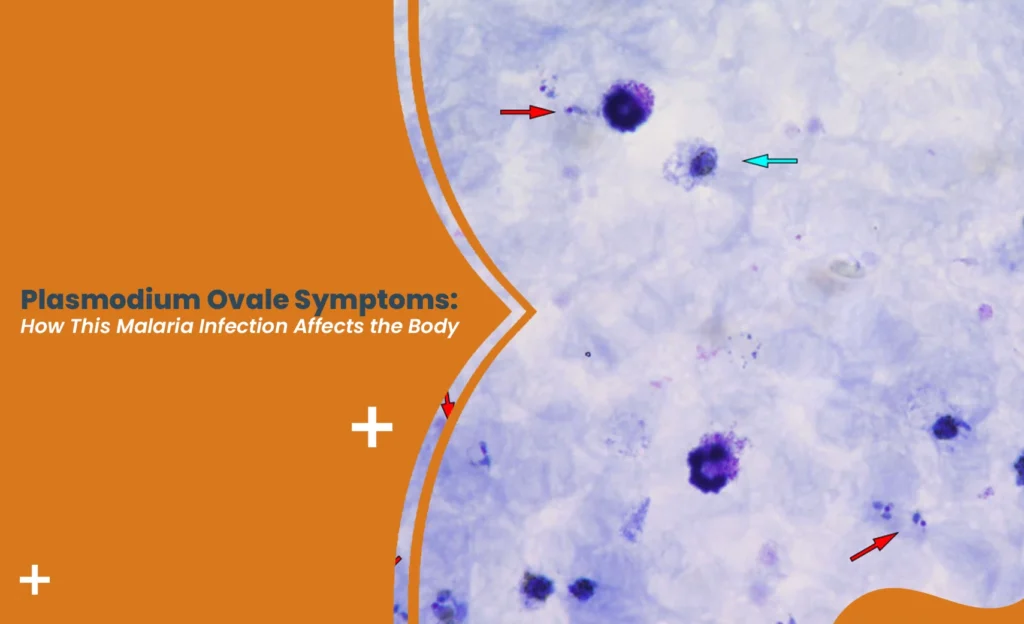
Most people, when they hear “malaria,” usually go straight to the more talked-about species like Plasmodium falciparum or Plasmodium vivax. But there is this other, somehow less noticed culprit that causes problems in parts of West Africa and the Asia-Pacific area; it’s Plasmodium ovale. It’s often seen as gentler than some of the harsher relatives, yet it has a kind of sneaky side. It can sit quietly in the liver for months or even years, and then boom, a relapse shows up. If someone understands how the infection actually moves along, what symptoms to pay attention to, and what treatments matter, it really can change how fast a person catches it and how well it’s handled.
What Is Plasmodium Ovale?
This is one of the five parasites that cause malaria in humans, and it’s passed on through the bite of a female Anopheles mosquito that is infected. The name comes from the oval-ish look that infected red blood cells can take on under a microscope. Globally, it’s not as common as P. falciparum or P. vivax, but it still counts as a real public health issue in certain endemic places, especially tropical West Africa, Papua New Guinea, and some areas of Southeast Asia. One thing that makes P. ovale stand out is its ability to form dormant liver-stage parasites, called hypnozoites, which can “wake up” long after the first infection seems to have gone away.
Recognizing Ovale Malaria Symptoms
Plasmodium ovale infection symptoms often start 12 to 18 days after a person gets bitten, though sometimes it can be delayed for months because of that dormant liver phase. Early symptoms can feel a lot like a typical flu situation, and that’s one reason diagnosis can be slippery without a proper blood test. Common symptoms include
- Fever that appears then eases in cycles
- Chills and shivering spells
- Headaches
- Muscle soreness, overall fatigue
- Nausea, or mild stomach discomfort
- Sweating, especially after a fever spike
Since all of that overlaps with lots of other illnesses, travelers returning from malaria areas who develop flu-like symptoms are often told to get tested for malaria, even if everything feels “not so bad” at first.
The Telltale Fever Pattern
A pretty distinctive part of this infection is the fever cycle. Plasmodium ovale fever classically follows tertian fever, which means fever spikes come back about every 48 hours. This cyclical pattern happens because the parasite invades red blood cells in synchronized waves, and when each wave bursts out, it triggers another fever surge. People sometimes describe it like the fever settles down, then a day or so later it returns again, sometimes with more intensity. That recurring rhythm can be a useful diagnostic clue for clinicians who are trying to tell it apart from infections that cause steadier or more irregular fevers.
The Chills, Headache, and Body Aches That Come With It
Along with recurrent fever in ovale malaria, Plasmodium ovale chills are a hallmark experience. During a malaria episode, patients often notice a rough sequence: a “cold stage” filled with strong shivering and chills, then a “hot stage” where fever ramps up, and then a “sweating stage” when the fever breaks. If it’s left untreated, this run of stages can repeat every couple of days.
Plasmodium ovale headache is also commonly reported, often as a dull ache that stays present and then gets worse during fever spikes. When it joins muscle pain and fatigue, even normal everyday tasks can feel draining, so getting a diagnosis and treatment early really matters for comfort and recovery speed.
Why Ovale Malaria Can Come Back Months Later
Possibly the most unique, and also most important clinically, feature here is relapse. Relapsing ovale malaria happens because the parasite can form hypnozoites, a dormant liver stage that stays inactive for months, sometimes years, before it reactivates and causes another illness flare-up. So someone could be treated at first, feel totally fine for a long stretch, and then develop symptoms again later without any new mosquito bite in between. This relapse behavior is also seen with Plasmodium vivax, which is why the two are often compared and sometimes even mixed up in casual discussions.
Plasmodium Ovale vs Plasmodium Vivax: What Sets Them Apart
Comparing P. ovale vs P. vivax, they share several big similarities: both can relapse because of dormant liver-stage hypnozoites, both tend to show a tertian fever pattern, and both are usually viewed as less severe than P. falciparum. P. ovale often infects younger red blood cells, which can mean a lower overall parasite burden compared to P. vivax. P. vivax often needs the Duffy antigen on red blood cells to get established, so it is uncommon in populations lacking that antigen, which is common in some West African groups. This constraint isn’t something P. ovale shares, and that helps P. ovale spread where P. vivax has a tougher time. Even with those distinctions, symptom-wise the two infections can look very similar, so lab confirmation is essential. That means blood smear microscopy or PCR testing is the reliable way to pin down what’s actually going on.
How Treatment Affects Symptoms
Once you get diagnosed, treatment usually tries to do two things at once: deal with the active infection in the bloodstream and also wipe out the quiet liver-stage parasites so you don’t get a later relapse. Plasmodium ovale treatment (basically what someone might feel while they’re on antimalarial meds) often shows up as a slow sort of easing, like fevers and chills becoming less frequent within the first few days, along with a gradual bump in energy as the parasite load drops.
Chloroquine has often been used as the go-to option for the blood-stage infection in places where chloroquine resistance isn’t a big issue, and sometimes hydroxychloroquine is chosen too, like when HCQS 200 mg is the available route, always under medical supervision. It’s used because it works in a similar way against the blood-stage parasite. Still, to tackle the dormant liver-stage hypnozoites and cut down the chance of relapse, healthcare providers typically add medicines such as primaquine or tafenoquine, because blood-stage treatment by itself doesn’t stop the liver from later reactivating. Any antimalarial plan, even those based on hydroxychloroquine, should be started and dosed only with a qualified healthcare provider, because the “right fit” depends on things like local resistance patterns, your health background, and G6PD status, which matters a lot for how safe certain relapse-prevention medications can be.
To Conclude
Plasmodium ovale might not have the same “scary” reputation as P. falciparum, but it has this annoying ability to sit in the liver without much noise, then resurface months later. That makes it kind of a tricky infection to fully clear. When you notice the classic cycle of fever episodes, chills, headaches, and fatigue that show up with this parasite, and also when you compare it with close relatives like P. vivax, it can push patients and travelers to get testing and treatment sooner rather than later. With the right diagnosis and a full treatment course of HCQS 200 mg handles both the active blood infection and the dormant liver stage. Most people do recover, and they can avoid that frustrating relapse loop people associate with this parasite.
FAQs
1. How long after infection do Plasmodium ovale symptoms show up?
Symptoms typically start 12 to 18 days after an infected mosquito bite, but the dormant hypnozoite phase means some people won’t feel anything until months later, long after the first exposure.
2. Can Plasmodium ovale malaria be fatal?
It’s usually viewed as one of the milder forms compared with P. falciparum, and severe outcomes aren’t common. That said, any suspected malaria really should be treated promptly, because complications can happen, especially if the illness is ignored for a long time.
3. Why does ovale malaria keep coming back after treatment?
Yes, this may come back because parasites may stay in the liver as hypnozoites. If there isn’t medicine that targets that liver stage specifically, the parasite can wake up again and bring symptoms back later.
4. Is Plasmodium ovale spread from person to person?
No, it does not spread directly. It happens after biting you, an Anopheles mosquito, or from an infected mother to child during pregnancy.
5. How is Plasmodium ovale diagnosed?
Your healthcare provider will look at your blood smear under a microscope. This can be accomplished by PCR-based testing.