
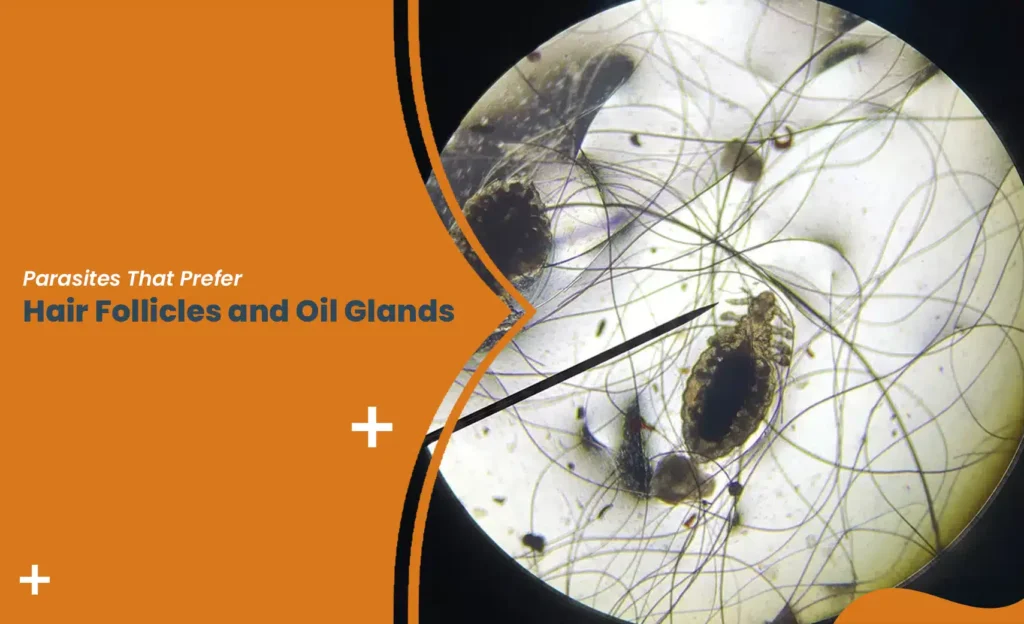
The thing about the human body is that we like to think of it as a temple, or at least a relatively private residence. But the truth is a bit more crowded. Right now, as you read this, there is a whole ecosystem-a tiny, invisible metropolis-thriving in the dark, oily crevices of your skin. It’s a bit humbling, isn’t it? To realize you aren’t just an individual, but a landlord to millions of guests who never pay rent.
Most of these tenants are harmless, even helpful. But then there are the specialists. The ones that don’t just sit on the surface but set up shop deep within the architecture of your face. I’m talking about the parasites that have a particular affinity for hair follicles and the sebaceous (oil) glands that keep them lubricated.
I remember talking to a dermatologist friend of mine a few years back. She told me that if people could actually see what was happening under a microscope during a routine facial, they’d probably never sleep again. It’s not about being “dirty.” In fact, these organisms often prefer a well-maintained, oily environment. It’s just… nature. But when that balance shifts, and these microscopic residents decide to throw a party that your immune system wasn’t invited to, things get complicated. That’s usually when people start looking into clinical interventions like Ivejuv 12mg to restore some semblance of order.
The Resident Strangers: Demodex Mites
If we’re talking about follicle-dwellers, we have to start with the Demodex mite. There are two main types that call us home: Demodex folliculorum and Demodex brevis.
The folliculorum variety is the social butterfly. They hang out in the hair follicles particularly around the eyelashes and eyebrows. They’re elongated, translucent, and-brace yourself-they don’t have an anus. They just spend their lives eating skin cells and sebum until they literally explode, releasing a lifetime of waste into your pores. It sounds like a horror movie plot, but for most of us, it’s just a Tuesday.
Then there’s Demodex brevis. These guys are the recluses. They prefer the deeper sebaceous glands. Because they live deeper down, they can be a bit more stubborn to deal with. When their population booms-a condition known as demodicosis-you don’t just get an itch. You get inflammation, redness, and a sandpaper-like texture to the skin that defies your most expensive moisturizers.
I’ve seen people try every “natural” remedy under the sun-tea tree oil, apple cider vinegar, even weird sulfur masks that make you smell like a struck match. And while those might help keep the surface population in check, they rarely reach the deep-seated residents. This is why doctors sometimes pivot to pharmacological heavy hitters. When the infestation is systemic or particularly aggressive, a prescription for Ivejuv 12mg might enter the conversation. It’s one of those “nuclear options” that works by paralyzing the nervous system of the mites, effectively evicted the squatters that topical creams can’t reach.
Why Your Oil Glands Are Prime Real Estate
You might wonder why anything would want to live in an oil gland. From a parasite’s perspective, it’s the ultimate all-you-can-eat buffet. Sebum is rich in lipids, providing both a food source and a protective barrier against the outside world.
But it’s a delicate equilibrium.
When your hormones fluctuate, or your immune system takes a hit from stress or illness, your oil production changes. This is like opening the floodgates. More oil means more mites. More mites mean more waste products and bacteria. It’s a cycle that leads directly to conditions like rosacea or blepharitis (that annoying, crusty inflammation of the eyelids).
I’ve noticed a trend lately in health journalism to blame “gut health” for everything-and don’t get me wrong, the microbiome is huge-but sometimes, a skin issue is just a skin issue. It’s a physical overpopulation problem. If you have five thousand mites where there should be five hundred, your skin is going to scream. Using something like Ivejuv 12mg isn’t about “detoxing”; it’s about pest control. It’s about bringing the population density back down to a level your body can handle.
Beyond the Mites: The Fungal Connection
While mites get the most “eww” factor, we can’t ignore the fungi. Specifically, Malassezia.
Now, Malassezia is technically a yeast, but it behaves in a parasitic way when it gets out of control. It lives in the same neighborhoods as the mites because it also thrives on human sebum. It’s the primary culprit behind seborrheic dermatitis and that stubborn “fungal acne” (pityrosporum folliculitis) that doesn’t respond to traditional zit creams.
It’s strange, isn’t it? We spend billions on skincare, trying to strip away the very oils that these organisms need to survive, yet we often end up damaging our skin’s natural barrier in the process. This creates tiny cracks and inflammation, which-ironically-can make it easier for parasites to thrive.
I once interviewed a woman who had been misdiagnosed with “adult acne” for three years. She’d tried every acid, peel, and antibiotic in the book. It turned out she had a massive Demodex overgrowth complicated by Malassezia. Her skin wasn’t “breaking out”; it was reacting to an invasion. Once she was put on a targeted regimen-which, again, often includes an antiparasitic like Ivejuv 12mg alongside fungal treatments-her skin cleared up in weeks. It’s a reminder that we often treat the symptom rather than the inhabitant.
The Psychological Toll of the “Invisible Itch”
There is a specific kind of anxiety that comes with knowing something is living on your face. I call it the “formication” effect-that sensation of tiny insects crawling on or under your skin. Even if it’s mostly psychological, the physical reality of a follicle parasite can be genuinely distressing.
The itching often gets worse at night. Why? Because Demodex mites are photophobic. They wait for the lights to go out before they crawl out of the follicles to mate on the surface of your skin. It sounds like something out of a gothic novel, but it’s just biology. That nighttime “tickle” on your nose or forehead isn’t always your imagination.
For many, this leads to over-cleansing. We scrub and scrub, thinking we can wash the problem away. But these parasites are evolved to hang on. Their legs are tiny, clawed appendages designed to grip the walls of your hair follicles. You can’t wash them away any more than you can wash away a freckle.
This is why medical intervention is so grounding. It moves the problem from the realm of “I feel dirty” to “I have a treatable biological imbalance.” Taking a dose of Ivejuv 12mg feels definitive. It’s a clinical “no” to the overgrowth. It takes the power away from the “creepy crawlies” and puts it back in the hands of the patient.
Modern Life and the Mite Boom
Are we seeing more of this lately? It’s hard to say if the parasites are becoming more common or if we’re just getting better at identifying them. However, our modern lifestyle might be playing a role.
Think about our heavy use of occlusive makeup, long-wear foundations, and the “slugging” trend (covering the face in petrolatum). While these can be great for hydration, they also create a warm, anaerobic, oil-rich environment. It’s like building a luxury condo for a mite.
Then there’s our immune systems. Between chronic stress and the myriad of environmental factors we deal with, our bodies are often too “distracted” to keep the Demodex population in check. Usually, our immune system just picks them off if they get too bold. But when we’re run down, the mites move in.
The Treatment Landscape
So, what do we actually do about it?
First, we stop the “scorched earth” policy. Blasting your skin with harsh alcohols and physical scrubs just causes more inflammation, which actually helps the parasites by providing more dead skin cells for them to eat.
Instead, the approach is usually twofold:
- Topical Management: Using ingredients like ivermectin cream or sulfur to kill surface mites.
- Systemic Intervention: For deeper, more persistent cases, oral medications are used. This is where Ivejuv 12mg comes into play. By circulating through the bloodstream, the medication reaches the sebaceous glands from the inside out. It hits the Demodex brevis where they hide-deep in the oil glands where topicals often fail to penetrate.
I’ve heard critics say that using an oral antiparasitic for skin issues is “overkill.” But if you’ve spent years dealing with a face that feels like it’s constantly under siege, “overkill” starts to sound like a pretty good plan. The efficacy of Ivejuv 12mg in these scenarios isn’t just about clear skin; it’s about the peace of mind that comes with a quieted immune system.
A First-Person Reality Check
I’ll be honest-writing this makes me want to go wash my face. But I also know that a basic foaming cleanser isn’t going to change my microscopic reality. And that’s okay.
We have to live with these things. They are part of being a mammal. But we don’t have to let them take over. If you find yourself with persistent redness around your nose, itchy eyelids that won’t quit, or “acne” that seems to flare up for no reason, it’s worth asking your doctor if you’re actually dealing with a parasitic overgrowth.
Medical science has come a long way from the days of just “hoping it goes away.” We have specific tools now. Whether it’s a change in your cleansing routine or a targeted course of Ivejuv 12mg, the goal is the same: returning your skin to a state of balance.
Final Thoughts
At the end of the day, our skin is a battlefield, a garden, and a home all at once. We shouldn’t be disgusted by the presence of life on our bodies-it’s actually a sign of a complex, functioning ecosystem.
The problem only arises when the guests start breaking the furniture.
If you suspect your follicles are being overrun, don’t panic. You aren’t “unclean,” and you aren’t alone. You’re just a landlord whose tenants have gotten a little out of hand. With the right approach-and perhaps a little help from Ivejuv 12mg-you can get your “private residence” back to being, well, private.
It’s a strange world we live in, where the most significant battles are fought in the space of a single pore. But as long as we keep a sense of humor and a healthy dose of scientific curiosity, we can manage the crowd. Just maybe don’t think too hard about the “no anus” thing while you’re eating dinner.
FAQs
1. Wait, so if everyone has these mites, why is my skin the only one acting up?
It feels unfair, doesn’t it? You and your best friend could have the exact same number of Demodex mites, but while they have “glass skin,” you’re dealing with redness and bumps. It usually comes down to your immune system’s “tolerance” levels. Some people’s bodies just ignore the mites. Others see a single mite move in and trigger a massive inflammatory response-it’s like having a neighbor who calls the cops the second you turn on the TV. When your system is overreacting, or the population truly explodes, a doctor might suggest Ivejuv 12mg to thin out the crowd and give your immune system a chance to calm down.
2. Can I catch “extra” mites from my dog or my partner?
I get asked this a lot, especially by people who are suddenly side-eyeing their golden retriever. The short answer is: not really. The mites that live on humans (Demodex folliculorum) are incredibly picky-they only want human sebum. Your dog has his own species of mites that wouldn’t dream of moving onto your face. However, you can swap mites with other humans through close contact or sharing things like towels and makeup brushes. It’s not “contagious” in the way a cold is, because you already have them; you’re just… diversifying the local population.
3. Will washing my face five times a day get rid of them?
Please, don’t do this. I’ve seen people scrub their skin until it’s raw, thinking they can “clean” their way out of a parasitic imbalance. The mites live inside the follicle and deep within the oil glands. A surface scrub is like trying to get rid of a basement flood by mopping the roof. In fact, over-washing destroys your skin barrier, creating inflammation that can actually make the environment more hospitable for parasites. If the deep-dwellers are the problem, you need something that works internally, like Ivejuv 12mg, rather than a more aggressive loofah.
4. Is there a “season” for these skin parasites?
Oddly enough, yes. Many dermatologists notice that “mite-related” flares tend to peak in the spring and summer. It makes sense if you think about it: warmer weather means more sweat and more oil production. Since sebum is the primary food source for these organisms, a heatwave is basically a giant Thanksgiving dinner for them. If you notice your skin gets “angry” and bumpy every time the humidity hits, you might not just be reacting to the heat-you might be witnessing a population boom.
5. How do I know if I actually need a prescription?
If you’ve tried the standard over-the-counter acne treatments (salicylic acid, benzoyl peroxide) and your skin is just getting redder or itchier, that’s a major red flag. Parasitic “acne” doesn’t respond to traditional bacteria-killers. If your skin feels like it’s crawling at night, or if you have persistent crustiness along your lash line, it’s time to see a professional. They can do a simple skin scraping to check the density. If the count is high, they might skip the creams and go straight to Ivejuv 12mg to handle the issue from the inside out.